
Speech • Language • Late Talkers • Apraxia • AAC • Autism • Gestalt Language Processing • Feeding
Speech, Language, & Feeding Therapy

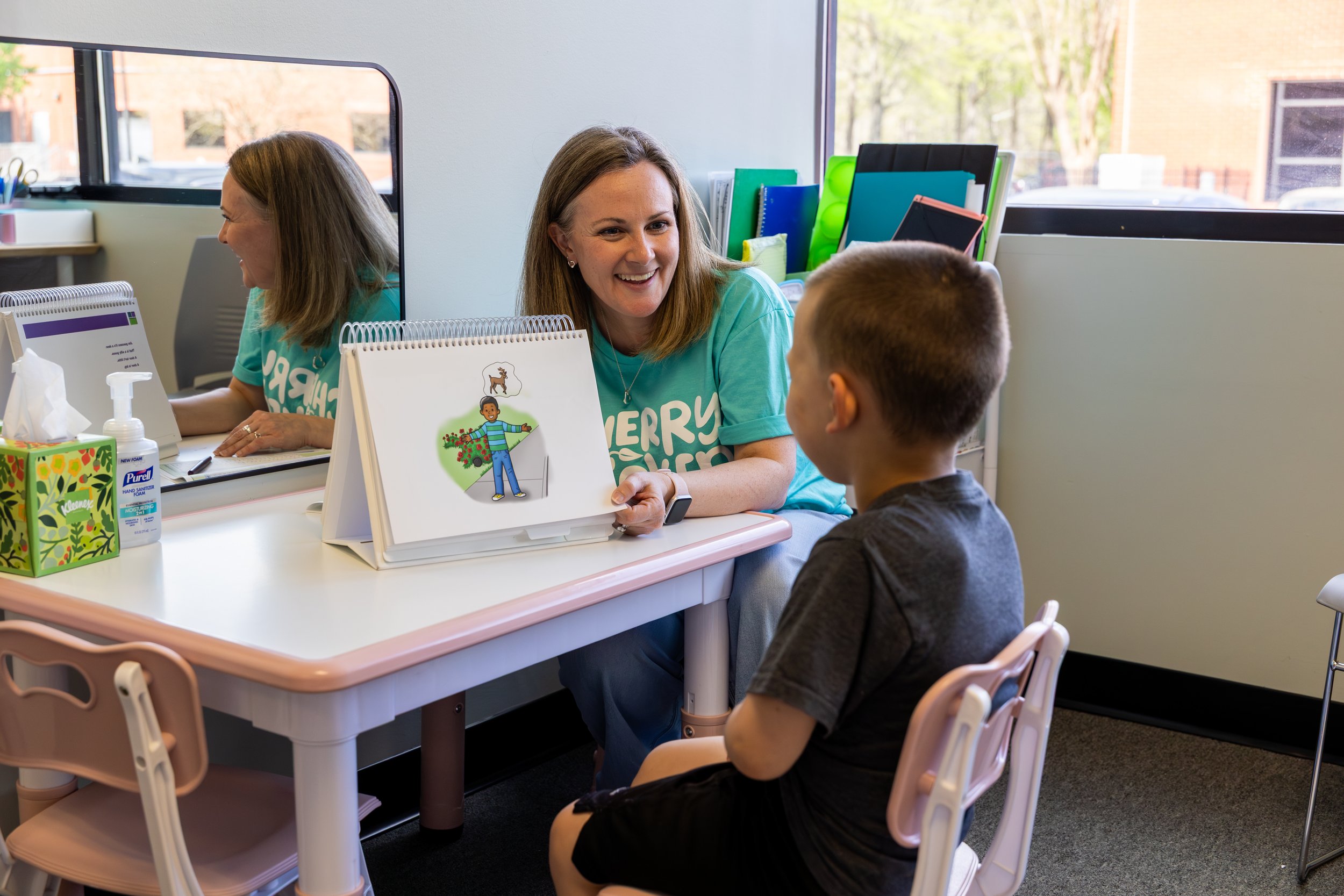
Let’s Begin with an Evaluation
If you’re concerned about your child’s speech, language, or feeding development, the first step is an evaluation.
We’ll gather information about your child’s strengths and challenges through case history forms, parent interviews, observations during play and eating, and formal, standardized assessments.
Looking specifically for an AAC evaluation? We’ll help you trial speech-generating devices to find the best fit for your child and walk you through the process for getting your AAC device funded through insurance!
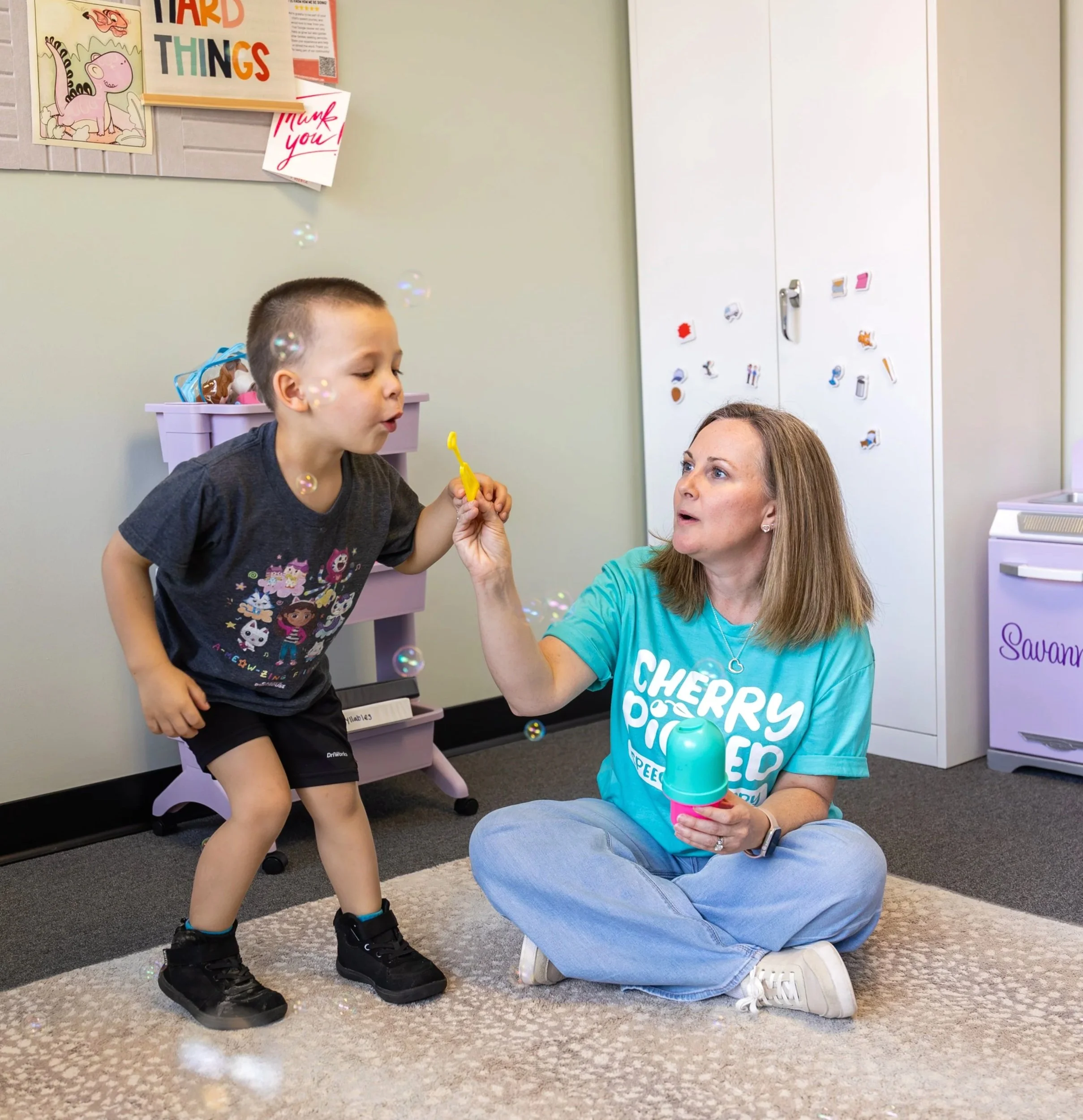
Our Approach to Therapy
At Cherry Picked Speech Therapy, we want your child to look forward to our sessions all week! You won’t find us doing boring drills or sitting at a table all the time… instead, we’ll target their goals while playing games, exploring new foods, coloring, building with magnetic tiles, or jumping across stepping stones.
As a parent or caregiver, you will be seen as a valuable member of your child’s therapy team. We invite you to join in and learn alongside your child, so that you feel confident supporting their speech, language, and feeding development in the real world.
-
In speech therapy, your child will practice making clear and accurate speech sounds while having fun! We’ll use motivating activities and games to help your child:
Say age-appropriate sounds
Speak with confidence
Feel understood by others
Reduce frustration
Speech therapy uses evidence-based approaches to address articulation errors, phonological patterns, and motor speech challenges related to Childhood Apraxia of Speech (CAS).
-
In language therapy, we’ll focus on helping your child understand and use words to communicate in daily life. We’ll use toys, books, and playful activities to help your child:
Learn new words
Comprehend and follow directions
Express their needs, wants, and ideas
Socialize with family and friends
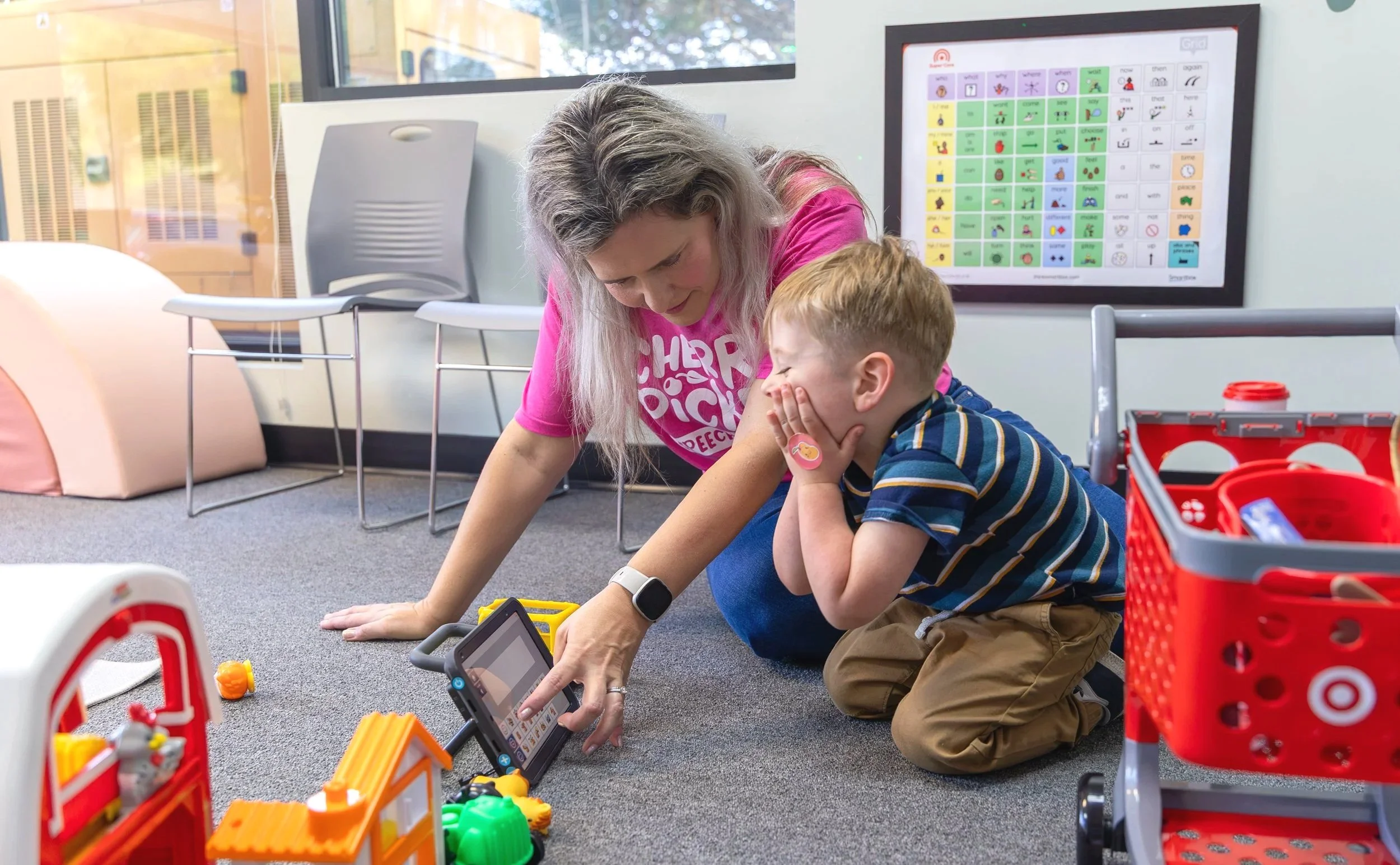
For children who are minimally-speaking, language therapy may also incorporate the use of an AAC (speech generating) device.
-
In feeding therapy, we’ll focus on building your child's eating and drinking skills so that they can safely enjoy meals that help them grow. Our feeding therapists will follow your child’s lead to help them reach goals such as:
Eating a variety of foods, textures, and flavors
Safely and efficiently chewing, drinking, and swallowing
Reducing gagging or choking
Happily participating in meals
We know that many social events center on food and meals. Our goal is to do whatever it takes to make mealtimes (and everyday life) more enjoyable for your whole family!

We have answers!
Questions About Pediatric Speech Therapy?
-
There are a variety of milestones we consider when recommending a speech evaluation. At age 1, children are usually babbling, using simple gestures, and may say their first word. By age 2, they have at least 50 words, combine words into 2-word phrases, and ask simple questions. At age 3, they are using longer sentences, taking turns in conversation, and following 2-step directions.
If your child is not meeting these milestones, is difficult to understand at age 3, has a loss of previously gained skills, or is becoming more frustrated by being unable to communicate, we recommend booking a speech evaluation.
-
You may consider a feeding evaluation if your child:
is not eating age-appropriate foods/textures
has difficulty chewing and swallowing foods, resulting in pocketing them in their cheek or spitting them out
has a limited or restrictive diet with minimal variety of food groups or textures
gags, coughs, or chokes while eating or drinking
-
After your child’s evaluation is complete, your speech therapist will share the results, make therapy recommendations, and work with you to schedule weekly (recurring) therapy sessions.
You will receive your child’s evaluation report via our online client portal, and we will also send a copy to the referring physician.
-
By age 5, most children can pronounce most sounds correctly, with minimal sounds errors persisting past ages 6-7. Most people should be able to understand your child’s speech at age 4.
-
AAC stands for “Augmentative and Alternative Communication,” which refers to the use of pictures, visuals, signs, gestures, and speech-generating devices for communication.
When a child is non-speaking, minimally speaking, or unable to reliably speak, we can use AAC to bridge the gap and help them express their ideas.
Our speech therapists can help determine whether your child may benefit from a speech-generating AAC device. We’ll figure out which device and language/vocabulary program would best meet their needs, complete necessary paperwork, and support you in the process of getting the device funded by your medical insurance.